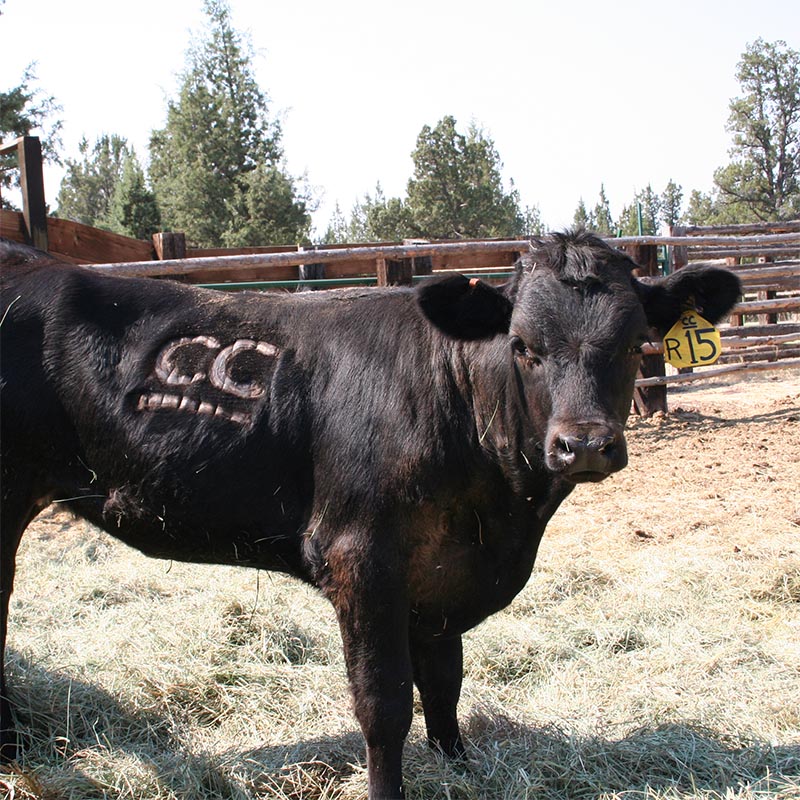
We’ll have bred Angus Heifers available for sale in the December 2009 Video auction in Reno, NV. We’ll keep you posted as we get closer to the sale date.
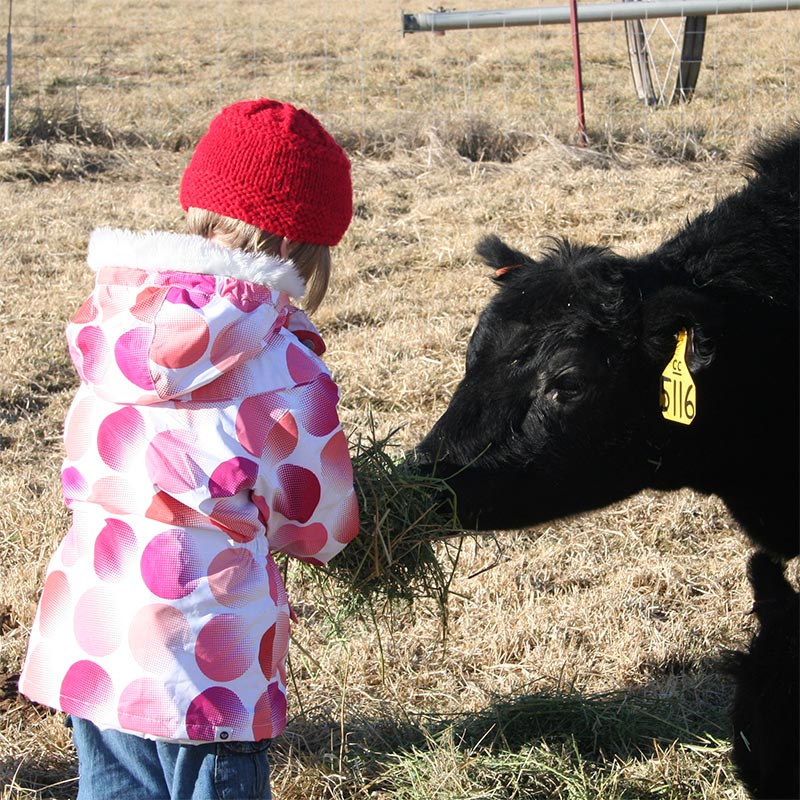
What do they say? Round bales are easier for one person to feed. I think Ingrid’s going to need her gloves for this one…
Another historical site in Warner Valley is the Greaser Petroglyph.
At the time of European contact the predominate Native Amerian group using the area was the Northern Paiute. Many of the petroglyphs of southeast Oregon may date to the time of the Pluvial Lakes which fill many of the desert basins. Some estimates place the earliest petroglyphs to as much as 12,000 years old, if so the Northern Paiute may not have been involved with creating them.
There’s a sign at this location, reading, “These designs are examples of Native American rock art. They are called petroglyphs. The exact meanings of the designs are not known. They may have been used in ceremonies, or as maps. Perhaps they marked tribal ownership or represented personal power.”
Native American artifacts found in the Fort Rock area of North Lake County have been dated to 9,000 years ago. White traders, explorers and military expeditions arrived in the 1800s. Peter Skene Ogden led Hudson’s Bay Company trappers at Goose Lake in 1827, in 1832 the Hudson Bay trappers under John Work were in Surprise Valley area and mentioned Hunter’s Hot Springs. Work visited Warner Lakes, Abert Lake, camped at Crooked Creek in Chandler Park area where they ate wild plums, which still grow in the area. They also reported being attacked by Indians. In 1838 Colonel J. J. Abert, U.S. engineer, prepared a map showing Warner Lakes and other natural features using information from Hudson Bay trappers and in 1843 a John C. Fremont party named Christmas (Hart) Lake.
Lake County was once home to Basque and Irish sheepherders. Cattle ranchers later feuded and beat out the wandering sheepherders. Lake County grew with the arrival of homesteaders, but the dry climate made for tough going.
Lake County was created from Jackson and Wasco Counties on October 24, 1874 by the State Legislature. It then included the present Klamath County and all of the present Lake County except Warner Valley. In 1882 land was removed to create Klamath County, and in 1885 the Warner area from Grant County was added. Linkville, now Klamath Falls, was the first county seat.
M. Bullard gave 20 acres as the Lakeview townsite. By the 1875 election a town had been started there and an election moved the county seat to Lakeview. Because of poor transportation connections with the rest of Oregon, the early economic orientation of Lake County was toward California. As an indicator of that connection, both the San Francisco Chronicle and the San Francisco Examiner arrived in Lakeview daily, often before the The Oregonian. During the 1840s and 1850s the county was part of the military courier route between The Dalles on the Columbia River and the Presidio in San Francisco.
The county acquired a railroad connection in the 1890s. That railroad spur, the Nevada-California-Oregon Railway line running from Lakeview toReno, Nevada, emphasized the isolation of the county from the rest of Oregon. A devastating fire in 1900 destroyed much of Lakeview, including 75 businesses.
Pictured below is what’s thought to be the original homestead of the Crump Ranch. This house dates back a 100 years and is located on on the shores of Crump Lake.
Photo of Hart Mountain from the North end of Crump Lake.
Hart Mountain is a National Antelope Refuge is located on a massive fault block ridge that ascends abruptly nearly three quarters of a mile above the Warner Valley floor in a series of rugged cliffs, steep slopes, and knife-like ridges. Visitors experience spectacular views of the beautiful Warner Valley Wetlands while ascending the west side entrance road to headquarters.The west face of the mountain is cut by several deep gorges. Hart, Potter, and DeGarmo canyons, the most rugged, extend from the valley floor to the top of the main ridge. The east side of the mountain is less precipitous, descending in a series of rolling hills and low ridges to the sagebrush-grasslands typical of southeastern Oregon and the Great Basin. The rugged diversity of the terrain creates a rich mix of habitat types, home to more than 300 species of wildlife. Featured species include pronghorn antelope, California bighorn sheep, mule deer, sage grouse, and redband trout. The 278,000-acre refuge is one of the most expansive wildlife habitats in the arid West free of domestic livestock. Since its creation in 1936 as a range for remnant herds of pronghorn antelope, management of the refuge has broadened to include conservation of all wildlife species characteristic of this high desert habitat and restoration of native ecosystems for the public’s enjoyment, education, and appreciation.
For more information on Hart Mountain, visit the U.S. Fish & Wildlife website
Alfalfa provides three summer cuttings; and hay meadows will typically provide one cutting of high quality wild hay in July. Approximately 2,000 tons of hay is annually available for sale. Hay is normally baled in 3-twine bales and stacked in 60 bale squeeze blocks – ready for transport.
The Crump Ranch operates a diversified farming program and annually produces over 3,000 tons of forage and grain commodities. Crops are rotated between alfalfa, barley, oats and forage mixes of oats and peas and varing hay crops. An active noxious weed program is in effect which assures a very high quality grain and hay commodity. Irrigation water is applied by flood and wheel-lines and is carefully managed and balanced with wildlife requirements.
Grain is typically planted in May and harvested in early September. Grain storage capacity is 2,800 tons, and the overhead grain elevator will load trucks at the rate of 30 tons/hour. Soil samples are routinely collected on an annual basis and crops are rotated and supplemented to assure productive ground and good farming practice.